
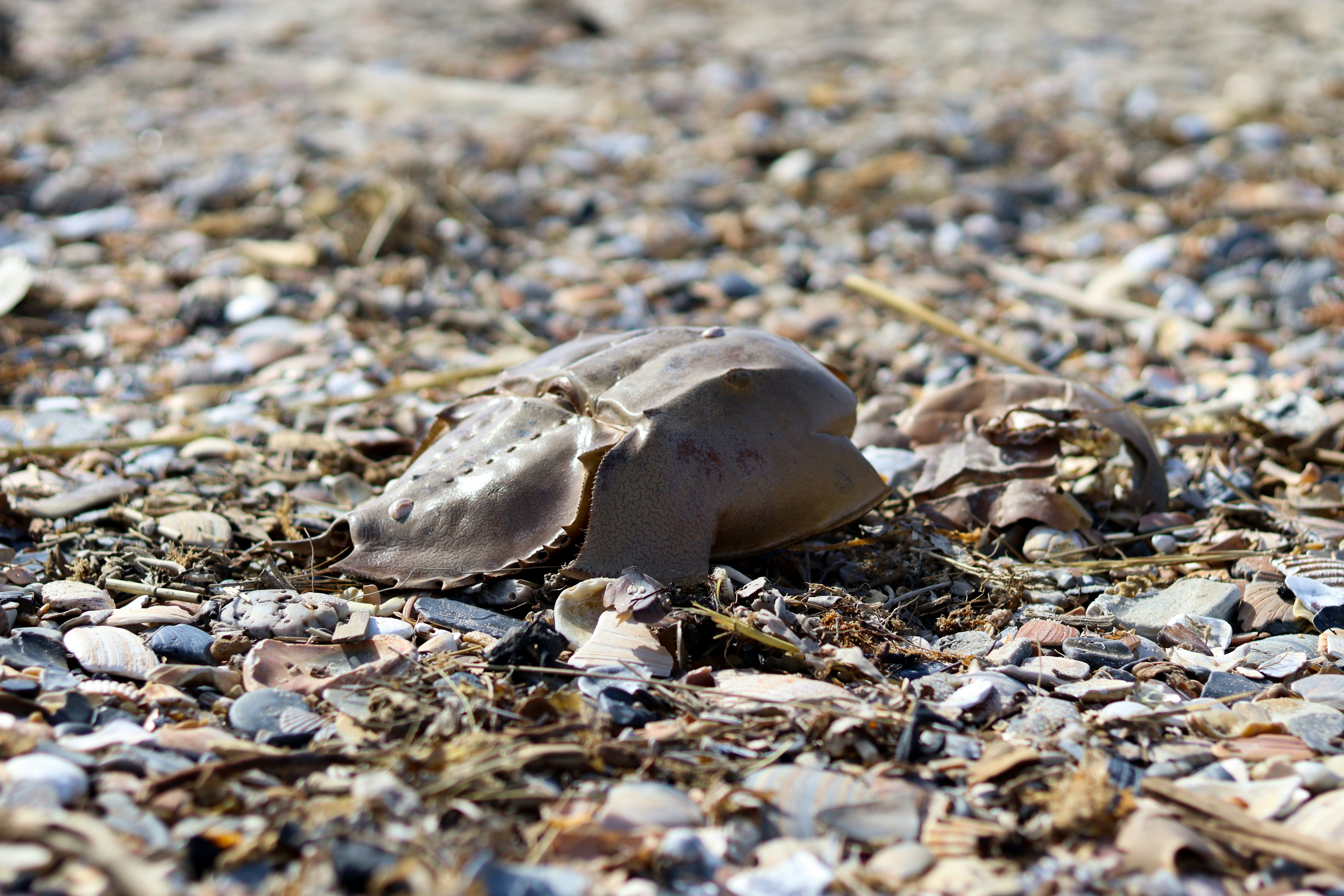
What We Take From the Tide
Introduction: An Ancient System Meets Modern Demand
Each spring, the beaches of Delaware Bay host the largest spawning aggregation of horseshoe crabs on Earth. These animals—whose lineage stretches back roughly 450 million years—crawl ashore in enormous numbers to bury clusters of eggs in the sand. For millennia, this seasonal pulse has fueled one of the Western Hemisphere’s most remarkable wildlife events: the northbound migration of shorebirds such as the red knot, which rely on the crab eggs to refuel during journeys from South America to the Arctic.
During the late twentieth century, however, human demand for horseshoe crabs—both as fishing bait and as a biomedical resource—pushed this ecological system toward collapse. Conservation managers responded with harvest restrictions and a novel adaptive management framework linking crab harvest directly to bird populations. The results offer a mixed picture: the crabs are recovering, but the migratory birds that depend on them remain well below historical numbers.
The Delaware Bay Ecosystem
Delaware Bay lies roughly halfway between New York and Washington, D.C., where the Delaware River widens into a large estuary before meeting the Atlantic Ocean. Covering roughly 800 square miles, the bay is shallow and highly productive, with an average depth of about 24 feet and tidal ranges of roughly 6 feet.
Much of the shoreline is bordered by salt marshes—over 200,000 acres of tidal wetlands that filter nutrients, stabilize sediments, and support dense communities of fish, crabs, mollusks, and migratory birds. The mixing of freshwater from the river with ocean water creates a nutrient‑rich environment that fuels high plankton productivity and complex food webs.
For horseshoe crabs (Limulus polyphemus), Delaware Bay offers near‑ideal spawning habitat. The gently sloping beaches allow females to reach the upper tide line without heavy surf, while sand textures allow eggs to remain moist but oxygenated between tidal cycles. Spawning typically peaks in May and June when water temperatures reach roughly 15–20°C and tidal amplitudes are highest around full and new moons.
Female horseshoe crabs can lay tens of thousands of eggs during a single spawning season. Many of these eggs are exposed by waves or by other spawning crabs, creating dense patches of food on the beach surface. Migratory shorebirds such as the red knot (Calidris canutus rufa) time their arrival precisely to coincide with this event. For birds arriving exhausted after flying thousands of miles, these eggs provide a high‑energy food source that allows them to rapidly gain weight before continuing north to Arctic breeding grounds.
Before Conservation: Harvest and Collapse
Horseshoe crabs have been harvested along the Atlantic coast for centuries. Indigenous communities used them as food and fertilizer, and colonial farmers continued the practice on a larger scale. The most dramatic pressure on crab populations, however, emerged in the late twentieth century.
During the 1990s, commercial demand for bait in American eel and channeled whelk fisheries expanded rapidly. Horseshoe crabs proved to be extremely effective bait, and harvest levels rose sharply. Recorded landings across Atlantic states increased from roughly 100,000 crabs in 1991 to approximately 2.5 million by the late 1990s.
Fishers often targeted females because they were larger and more attractive as bait. Removing breeding females directly reduced egg production on spawning beaches. Surveys during the early 2000s suggested that egg densities on Delaware Bay beaches had fallen dramatically—from tens of thousands of eggs per square meter to only a few thousand.
The decline had cascading ecological effects. Migratory shorebirds, particularly the red knot, depend heavily on horseshoe crab eggs during their brief stopover at Delaware Bay. Birds must nearly double their body weight in a matter of weeks to complete their migration to Arctic breeding grounds. As egg densities declined, birds struggled to accumulate sufficient fat reserves.
Red knot populations in the Atlantic Flyway declined sharply during this period. Once estimated at roughly 100,000 birds, the population fell to a few tens of thousands, eventually leading to the species being listed as threatened under the U.S. Endangered Species Act in 2015.
At the same time, another pressure on horseshoe crabs was growing: biomedical harvesting. Horseshoe crab blood contains specialized cells used to produce Limulus Amebocyte Lysate (LAL), a substance that clots in the presence of bacterial toxins. LAL is widely used to test vaccines, injectable drugs, and medical devices for contamination.
Biomedical facilities collect crabs, extract up to about 30 percent of their blood, and then release them back into the ocean. Industry estimates have historically suggested mortality rates of around 10–15 percent following bleeding, though independent research indicates mortality may be closer to 30 percent when sub‑lethal effects are included.
By the mid‑2010s, hundreds of thousands of crabs were being bled annually along the U.S. Atlantic coast.
Conservation Efforts
Recognition of the system’s collapse prompted a series of management actions beginning in the late 1990s. The Atlantic States Marine Fisheries Commission (ASMFC) implemented a coastwide horseshoe crab management plan in 1998, gradually introducing quotas and monitoring programs.
Over time, regulations tightened. Several states around Delaware Bay imposed moratoriums or severe restrictions on harvesting female horseshoe crabs. Eventually, female harvest for bait in the Delaware Bay region was reduced to zero.
The most innovative policy arrived in 2012 with the introduction of an Adaptive Resource Management (ARM) framework. Rather than managing horseshoe crabs in isolation, the ARM system explicitly linked crab harvest levels to the population status of migratory shorebirds.
Each year, scientists estimate horseshoe crab abundance through trawl surveys and spawning beach counts, while the U.S. Geological Survey estimates red knot populations through mark‑resight studies. These data feed into a population model that recommends a harvest level designed to maintain both crab populations and bird food supply.
Under current management, the system generally allows harvest of male horseshoe crabs—up to roughly 500,000 animals annually—while maintaining a prohibition on female harvest in the Delaware Bay region.
Meanwhile, advances in biotechnology have created a possible alternative to biomedical bleeding. Researchers successfully developed a synthetic test known as recombinant Factor C (rFC), which can detect bacterial contamination without using horseshoe crab blood. In 2025, the U.S. Pharmacopeia formally approved rFC as an alternative testing method, potentially reducing future demand for wild crab blood.
However, adoption by pharmaceutical companies has been gradual because existing testing systems and regulatory approvals are deeply embedded in manufacturing processes.
Evaluating the Outcome
The recovery of horseshoe crabs in Delaware Bay is widely considered a partial conservation success. Survey data show that crab populations have rebounded significantly since the early 2000s. Estimates suggest that the bay now supports tens of millions of adult horseshoe crabs, with numbers approaching or exceeding levels observed before the harvest boom of the 1990s.
This recovery coincided with a sharp reduction in bait harvest. Annual landings fell from roughly 2.5 million crabs during the peak years of the 1990s to approximately 500,000 male crabs today.
The response of migratory shorebirds has been less encouraging. Red knot populations using Delaware Bay appear to have stabilized at around 40,000–45,000 birds—well below historical estimates. Researchers believe the discrepancy reflects pressures acting across the birds’ entire migratory route, including conditions in Arctic breeding areas and South American wintering grounds.
Climate variability may also complicate the system. Recent cold‑water events linked to shifts in ocean circulation have altered the timing of horseshoe crab spawning. If eggs become available earlier or later than the arrival of migrating birds, the birds may miss the peak food supply even if crab populations are healthy.
Another long‑term challenge is coastal change. Sea‑level rise, shoreline hardening, and storm erosion are gradually reducing the number of gently sloping sandy beaches suitable for horseshoe crab spawning.
Conclusion
The conservation story unfolding at Delaware Bay illustrates both the power and the limits of modern wildlife management. Harvest restrictions and adaptive management have helped stabilize and rebuild one of the world’s most ancient marine species. Yet restoring the broader ecological system that depends on those crabs—including migratory birds moving across an entire hemisphere—remains more complex.
Horseshoe crabs have survived multiple mass extinctions over hundreds of millions of years. Today, their future depends not on asteroid impacts or continental drift, but on how human societies choose to balance medicine, fisheries, and the functioning of coastal ecosystems.
Sources
- Botton, M. L., Loveland, R. E., & Jacobsen, T. R. (1994). Site selection by migratory shorebirds in Delaware Bay. The Auk, 111(3), 605-616
- Shuster, C. N., Barlow, R. B., & Brockmann, H. J. (Eds.). (2003). The American horseshoe crab. Harvard University Press
- Botton, M. L. (2009). Ecological importance of horseshoe crabs. In Biology and conservation of horseshoe crabs. Springer
- ASMFC. (2019). Horseshoe Crab Benchmark Stock Assessment
- Niles, L. J., et al. (2008). Status of the red knot (Calidris canutus rufa). Studies in Avian Biology, 36
- McGowan, C. P., et al. (2011). Adaptive management: Delaware Bay horseshoe crab-red knot. Environmental Management, 48(4), 784-792
- Cohen, J. A., & Brockmann, H. J. (1983). Breeding activity in horseshoe crabs. Bulletin of Marine Science, 33(2), 274-281
- Walls, E. A., Berkson, J., & Smith, S. A. (2002). Horseshoe crab: 200 million years. Reviews in Fisheries Science, 10(1), 39-73
- ASMFC. (2023). Delaware Bay Horseshoe Crab/Red Knot Specs
- Baker, A. J., et al. (2004). Rapid decline in red knots. Proceedings B, 271(1541), 875-882
- Leschen, A. S., et al. (2017). Recombinant Factor C. CRC Press
- Smith, D. R., et al. (2009). Status of Limulus polyphemus. Springer
- Kreamer, G., & Michels, S. (2013). History of Horseshoe Crab Harvest on Delaware Bay. Reviews in Fisheries Science, 21(4), 302-310
How this site works
We focus on verifiable outcomes and link to primary sources whenever possible. If you spot an error, we want to fix it.