
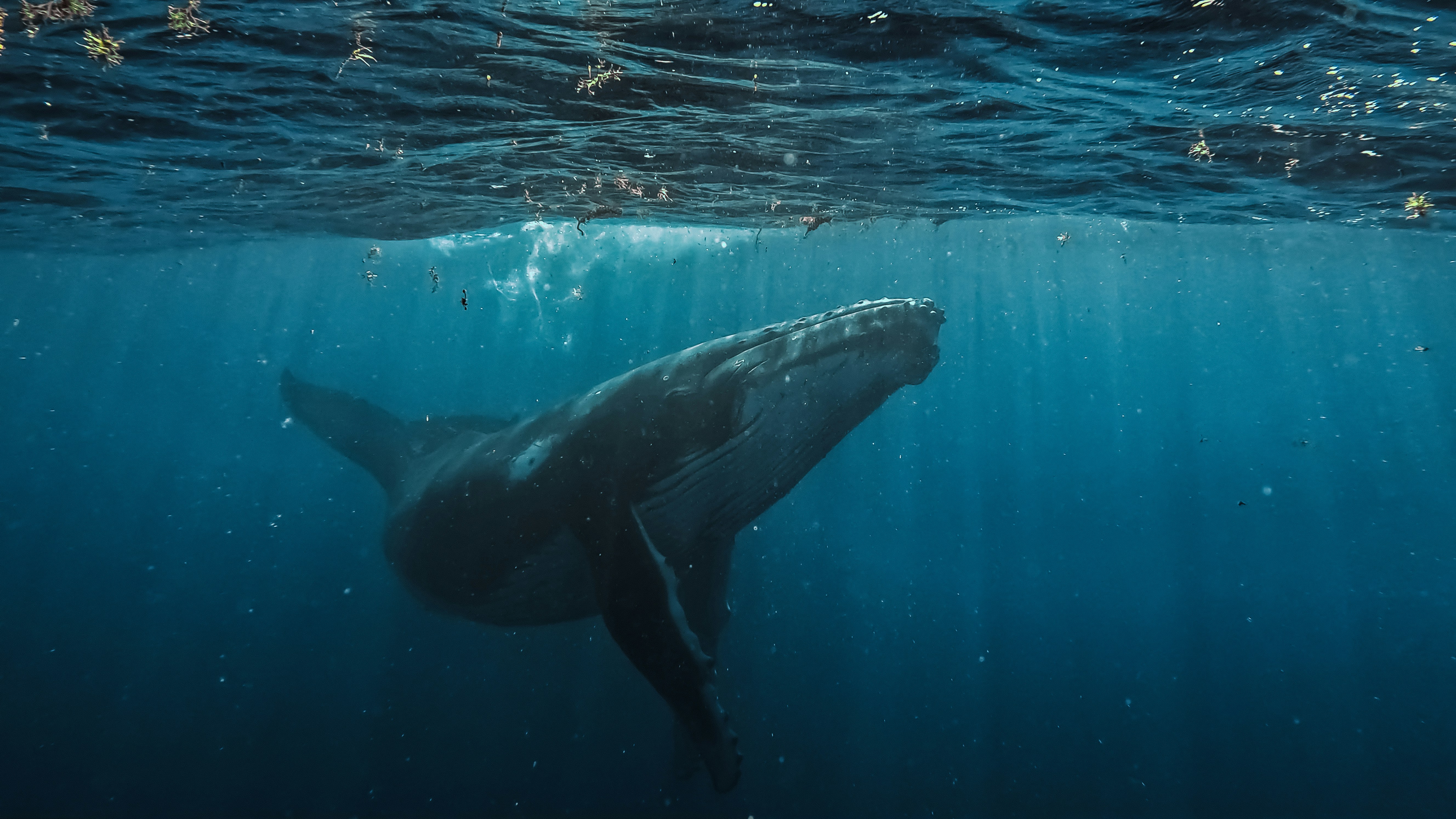
When Harpoon Waters Turned Gentle
Introduction: From Killing Ground to Refuge
For much of the twentieth century, the waters off eastern Australia formed part of a global killing ground for humpback whales. Commercial whaling stations targeted animals moving along predictable coastal migration routes, including those that passed through and alongside what we now know as the Great Barrier Reef. By the early 1960s, estimates suggest that the eastern Australian humpback population—once at least 30,000 strong—had collapsed to perhaps only around 150 individuals.
Today, that same population is widely estimated to exceed 50,000 whales, likely above pre‑whaling levels. The Great Barrier Reef, once a waypoint shadowed by harpoons, now functions as a seasonal refuge where humpbacks breed, calve, and rest under a layered set of protections. This article examines how that transformation occurred: the ecosystem context, the history before conservation, the specific interventions deployed, and what this unusually clean success reveals—and does not—about conservation more broadly.
The Great Barrier Reef as Seasonal Habitat
The Great Barrier Reef stretches for more than 2,000 kilometers along Australia’s northeast coast, but it is not a single wall of coral. Instead, it is an archipelago of outer barrier reefs, mid‑shelf platforms, and inshore fringing reefs separated by channels and lagoons of varying depth. From above, these structures appear as scattered turquoise patches on a deep blue sea. From within, they form an uneven underwater landscape of shoals, slopes, and basins.
To the east of the outer reefs, the Coral Sea drops away into deeper, more exposed water where long ocean swells dominate. To the west, the seafloor slopes toward the Queensland coast, where river plumes carry freshwater and sediment into estuaries, mangrove forests, and seagrass meadows used by dugongs and turtles. Tiny phytoplankton feed zooplankton, which in turn feed small baitfish; those fish sustain larger predators such as reef sharks, groupers, and trevallies sheltering among the coral structures. When these organisms die, their bodies help build and fertilize the very framework that sheltered them, closing local nutrient loops over years to centuries.
For humpback whales (Megaptera novaeangliae), this reef system serves a different purpose. They do not migrate here to feed; their primary feeding grounds are in high‑latitude, cold waters of the Southern Ocean, where dense swarms of Antarctic krill and small schooling fish support intense seasonal foraging. The Great Barrier Reef functions instead as a winter and spring breeding and calving region. Shallow, more protected areas within and behind reef structures offer calmer, warmer water where newborn calves—born with relatively thin blubber and limited swimming capacity—can rest, nurse, and practice movement with reduced exposure to large swells.
The outer reef line also influences how energy and risk flow through the system. Reef structures refract and dissipate wave energy, shaping calmer leeward zones and more turbulent seaward faces. Established shipping lanes thread through certain channels, designed to reduce the risk of ship groundings and coral damage but also shaping where vessel noise and collision risk concentrate. Against this structured backdrop, humpbacks follow a largely coastal migratory “highway” along eastern Australia, moving north from Antarctic feeding areas to lower‑latitude breeding grounds and then south again with their calves once the young are strong enough to undertake the journey.
Before Conservation: Collapse Under Industrial Whaling
Commercial exploitation of humpbacks in the Southern Hemisphere intensified sharply in the twentieth century. Steam‑powered catcher boats, explosive harpoons, factory ships, and shore‑based processing stations turned what had once been a dangerous, uncertain hunt into an efficient industrial operation. Soviet fleets alone killed at least 48,000 humpback whales in the Southern Ocean between 1947 and 1973, with total international catches even higher. Many of these whales fed in the same Southern Ocean sectors used by eastern Australian humpbacks, connecting exploitation in distant polar waters to declines along Australia’s coast.
For the eastern Australian breeding stock (often referred to as Breeding Stock E1), the effect was dramatic. Reconstructions of pre‑whaling abundance suggest at least 30,000 humpbacks once used this migratory route. By the early 1960s, available data and catch analyses indicate that the population had been reduced to somewhere between about 150 and a few hundred individuals—roughly 3.5–5 percent of its original size. A 99‑percent decline brought the stock to the brink of effective extinction.
At that time, systematic monitoring was minimal. Information came primarily from whaling catch records, scattered sighting reports, and limited shore‑based counts during migration seasons. Scientists and managers understood that large whales were in severe trouble globally, but they lacked precise population estimates, detailed migration data, or clear trend lines. The question along the Great Barrier Reef was stark: had the population been pushed past the point where it could meaningfully recover, even if hunting stopped?
Conservation Enters: Bans, Laws, and Counting Whales
The first major step toward recovery was the removal of the dominant source of mortality. In 1963, the International Whaling Commission (IWC) imposed a ban on commercial hunting of humpback whales in the Southern Hemisphere. Subsequent IWC decisions and the broader 1986 moratorium on commercial whaling reinforced this protection, and Australia eventually closed its remaining whaling stations and adopted strong domestic laws, including the Environment Protection and Biodiversity Conservation (EPBC) Act, which lists humpbacks as protected marine species. Killing a humpback along Australia’s coast shifted, within a few decades, from accepted industry to prosecutable offense.
Legal protection alone was not enough. Managers needed to know whether these measures were working. Early monitoring along the east Australian migration corridor used simple visual counts from vantage points on land and from vessels, tallying blows and flukes during peak migration to generate crude indices of abundance and timing. While useful as an early warning system, these methods could not produce robust population estimates or track individual animals.
From the 1970s onward, researchers developed more sophisticated tools. Aerial surveys flew fixed transects over migration paths, using line‑transect sampling to estimate whale density in different sectors at different times. More importantly, scientists began building large photo‑identification catalogues based on photographs of humpback tail flukes. The unique pigmentation and scar patterns on the underside of each fluke act like a fingerprint. By matching flukes photographed in different years and locations, researchers could track individual survival, movements, and site fidelity, and apply mark–recapture models to estimate population size and growth rates.
Over time, whale‑watching operations became key data collectors. Tour boats along the east coast contributed thousands of fluke images, which were curated into regional catalogues and then, more recently, integrated into global, AI‑assisted platforms such as Happywhale. Machine‑learning algorithms can now identify individual whales across thousands of images in seconds, linking sightings from the Great Barrier Reef to photographs taken in other parts of the Southern Hemisphere.
Satellite telemetry added another layer. Tags attached to a subset of humpbacks provided high‑resolution tracks of migration routes, coastal corridor use, residency times in particular bays, and travel speeds. These data confirmed that many whales closely follow the continental shelf edge and pass through, or close to, key reef passages and coastal embayments, helping managers understand where and when whales are most likely to overlap with shipping and other human activities.
Demographic analyses drawing on these combined datasets indicate that, once large‑scale whaling stopped, eastern Australian humpbacks exhibited strong annual growth rates around 9–11 percent, near the species’ estimated biological maximum. Humpbacks are long‑lived (often 40–50 years or more) and females can calve roughly every two to three years under good conditions. Once adult survival improved and hunting mortality dropped, these life‑history traits allowed the population to recover rapidly from a very low base. By the 2010s and 2020s, multiple assessments converged on estimates exceeding 50,000 individuals for the eastern Australian population, with some analyses suggesting numbers between 50,000 and 60,000—above reconstructed pre‑whaling abundance.[web:13][web:77][web:79][web:114][web:125]
Managing a Growing Population in a Busy Reef
As monitoring clarified that the population was rebounding, the main management challenge shifted from preventing deliberate kills to reducing accidental harm in an increasingly busy seascape. The Great Barrier Reef region hosts commercial shipping, recreational boating, tourism, and fishing alongside conservation and cultural values.
In response, managers have deployed several specific strategies:
- **Approach regulations for tourism vessels and aircraft.** The Great Barrier Reef Marine Park Authority (GBRMPA) and related regulations set minimum approach distances and behavioural rules for vessels and aircraft interacting with whales. These rules limit how close and how fast whale‑watching boats can travel near whales, reducing disturbance, collision risk, and excessive noise.
- **Speed management and routing in key areas.** The 2024 Great Barrier Reef Outlook Report identifies shipping as a significant pressure, particularly in narrow channels and near ports. Speed guidelines and routing measures—especially during peak migration periods—aim to reduce the probability and severity of ship strikes by encouraging slower speeds and predictable vessel paths in high‑use whale areas.
- **Acoustic monitoring and noise considerations.** Passive acoustic monitoring has expanded in and around reef passages. Hydrophones deployed in the southern Great Barrier Reef have documented when and where humpback whales sing, and how vocal behaviour correlates with environmental factors and human noise. Studies from other regions show that vessel noise can substantially reduce the distance over which humpback songs can be heard, shrinking their communication space. These insights are increasingly used to inform spatial and temporal management of noisy activities.
- **Integration into broader Reef governance.** Humpback whales are now explicitly considered in the Reef 2050 Integrated Monitoring and Reporting Program and in strategic assessments of Reef condition. Their recovery is cited as a case study in how some components of the system can rebound under strong, well‑targeted protections even as other components, such as corals, remain under severe climate‑driven stress.
These measures rest on the monitoring foundation built over decades. Without reliable information on where whales travel, when they occupy specific reef areas, and how they respond to human activities, speed restrictions and distance rules would be hard to place and justify.
Evaluating the Conservation Effort
By multiple metrics, humpback conservation along Australia’s east coast qualifies as a rare large‑marine success story.
- **Population trajectory.** Eastern Australian humpbacks have rebounded from a few hundred animals in the early 1960s to at least 50,000 individuals today, likely surpassing pre‑whaling abundance. Growth has approached the species’ biological maximum under favourable conditions.
- **Threat reduction.** The primary historical threat—commercial whaling—has been effectively removed by binding international agreements and national law. Other direct threats (e.g., large‑scale bycatch) remain relatively limited for this stock compared to many other marine species.
- **Legal status.** Reflecting strong recovery, Australia removed humpbacks from its national threatened species list in 2022, while maintaining protections under marine legislation and international frameworks. Internationally, some humpback populations have been down‑listed or delisted where data support sustained recovery.
- **Management integration.** Humpback management is now embedded in broader Reef governance, including the Reef 2050 Plan, shipping management, and wildlife interaction guidelines.
At the same time, important caveats remain. Rising ocean temperatures, shifting prey distributions in the Southern Ocean, and changes in sea‑ice and krill dynamics could, over time, affect humpback foraging success and reproductive output. The current success is thus contingent: it rests on continued protection from direct killing, sustained management of ship‑strike and noise risks, and an assumption that their distant feeding grounds remain productive enough to support large numbers.
From a systems perspective, this case highlights how conservation outcomes depend on the nature of the dominant threat. For eastern Australian humpbacks, the main driver of decline—industrial whaling—was highly concentrated, clearly identifiable, and amenable to relatively straightforward regulatory elimination. Once that pressure was removed and not replaced by equally severe new threats, the species’ life‑history traits allowed rapid recovery without intensive, ongoing manipulation.
Many other conservation challenges, including those affecting the coral assemblages of the Great Barrier Reef itself, are not structured this way. They involve interacting pressures—climate change, water quality, local exploitation, disease—that cannot be switched off by a single treaty or law. In that context, the humpback recovery offers both encouragement and a caution: when there is a single “harpoon” to put down, legal restraint and good monitoring can be transformative. Where threats are more diffuse and structurally embedded in economies and climate, conservation requires different, more complex strategies.
Sources
- NOAA Fisheries. “Humpback Whale: Conservation & Management.” 2024
- NOAA Fisheries. “Humpback Whale.” Species profile, life history and status
- UBC CONS200. “The recovery of the Australian humpback whale population.” 2023
- Good News Network. “Humpback Whale Population Now Well Above Pre-Whaling Levels in Australia.” 2025
- HumanProgress / Warp News. “Eastern Australian Humpback Whales Now Well Above Pre-Whaling Levels.” 2025
- ABC News (Australia). “Eastern humpback whales recover from 150 to 50,000.” 2025
- Focusing on Wildlife. “Humpback Whale Population Now Well Above Pre-Whaling Levels in Australia.” 2025
- Australian East Coast Migration Corridor IMMA factsheets. “Australian East Coast Humpback Whale Migration Corridor.” 2023
- Brownell, R. L. et al. “Catches of Humpback Whales in the Southern Ocean, 1947–1973.”
- Brownell, R. L. et al. “Catches of Humpback Whales, Megaptera novaeangliae, by the Soviet Union, 1947–1973.”
- Clapham, P. J., Ivashchenko, Y. V. “A Whale of a Deception: The Illegal Soviet Whaling Campaign.”
- Embracing Conservation Success of Recovering Humpback Whale Populations: Evaluating the Case for Downlisting
- NOAA Fisheries. “Humpback Whales: An Endangered Species Act Success Story?” 2024
- NOAA Fisheries. “Successful conservation efforts pay off for humpback whales.” 2016
- Hakai Magazine / Coastal Review. “Whales’ rebound in Australia a success story: Duke biologist.” 2022
- Why Australia Should, and Shouldn’t, Take Humpback Whales Off Its Endangered Species List. 2015
- Great Barrier Reef Marine Park Authority. “Reef 2050 Integrated Monitoring and Reporting.”
- Great Barrier Reef Marine Park Authority. “Great Barrier Reef Outlook Report 2024 – 5.8.3 Impacts of shipping.” 2024
- Great Barrier Reef Marine Park Authority. “The Great Barrier Reef explained: size, species, threats and why it matters.” 2026
- WWF Australia. “Great Barrier Reef.”
- PLOS ONE. “Protecting Great Barrier Reef resilience through effective local management actions.” 2024
- Marine Mammal Science (Wiley). “Passive Acoustic Monitoring Reveals Temporal and Environmental Drivers of Humpback Whale Song in the Southern Great Barrier Reef.” 2025
- Frontiers in Marine Science. “Understanding Effects of Whale-Watching Vessel Noise on Humpback Whale Communication Space.” 2021
- Great Barrier Reef Marine Park Authority. “Whale, dolphin and dugong watching regulations.” 2022
- Great Barrier Reef Marine Park Authority. “Whale love songs echo along Australia’s humpback highway.” 2025
- WWF. “Shipping and Cetaceans: A Review of Impacts and Management Options.”
- Oceanic Society. “The Humpback Whale Life Cycle and Role in Ocean Health.” 2025
- Jervis Bay Wild. “The Life Cycle of the Humpback Whale.” 2025
- Alaska Department of Fish and Game. “Humpback Whale (Megaptera novaeangliae).”
- PBS Nature. “Humpback Whale Fact Sheet.” 2022
- NASA Earth Observatory. “The Great Barrier Reef Through Time.” 2026
- Sailing Whitsundays. “How Old Is The Great Barrier Reef?” 2025
- World Atlas. “How Old Is The Great Barrier Reef?” 2022
- Frontiers in Marine Science / climate and humpbacks; BBC Future. “Too hot for humpbacks: The race to protect Pacific whales.” 2024
- Various news and synthesis pieces on humpback migration timing shifts and climate
How this site works
We focus on verifiable outcomes and link to primary sources whenever possible. If you spot an error, we want to fix it.