
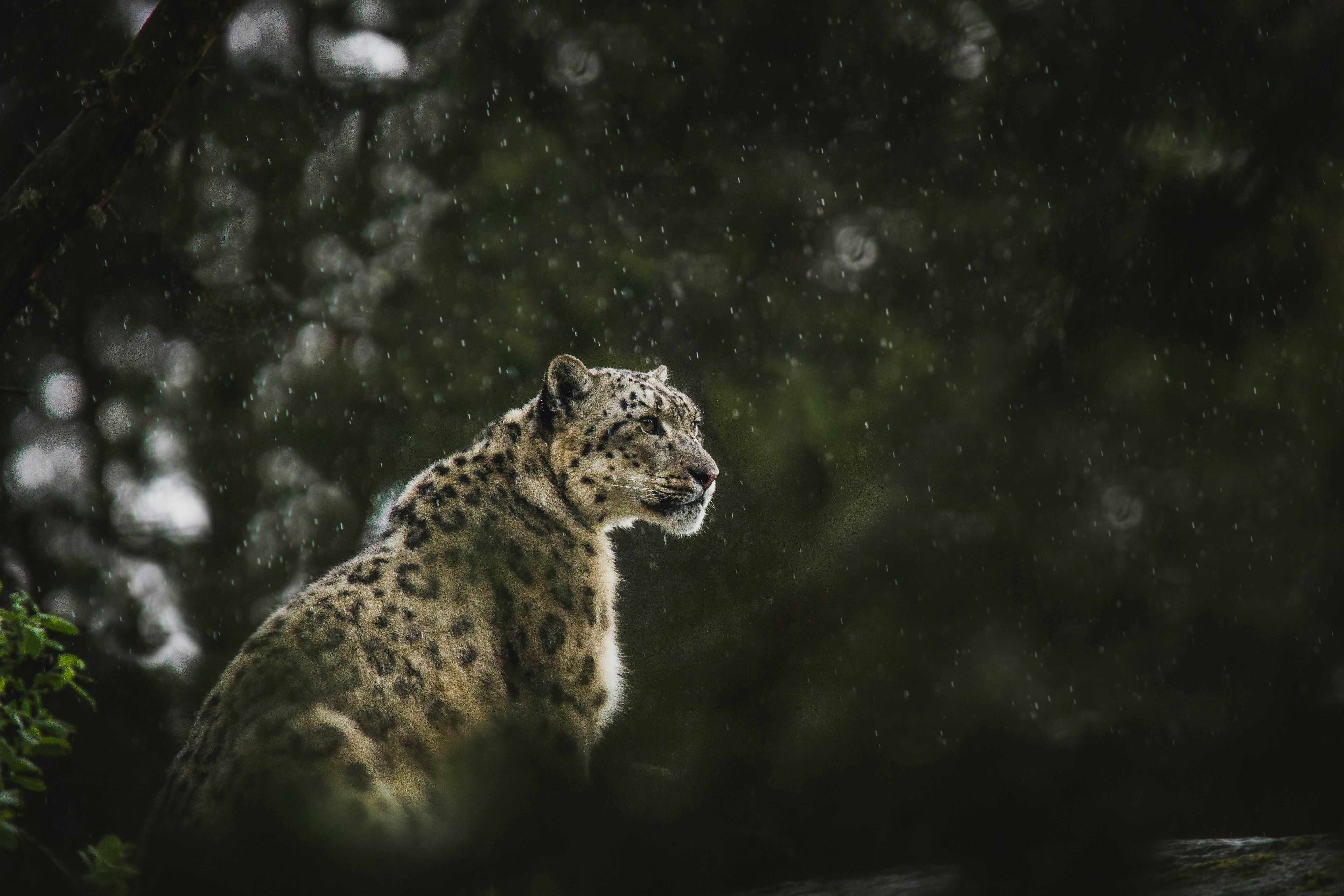
The Snow Leopard's Lament
A Predator Under Pressure
Snow leopards have never been abundant animals. They live at low densities, range across enormous territories, and occupy some of the most rugged terrain on Earth. For much of the twentieth century, this made them difficult to study—but also relatively insulated from direct human pressure. That insulation has steadily eroded.
Across the Himalayas and Central Asian highlands, rising temperatures, expanding infrastructure, and growing livestock grazing have compressed both people and wildlife into narrower bands of viable habitat. As prey distributions shift and human activity reaches higher elevations, snow leopards are increasingly forced into closer contact with pastoral communities. The result has been a long-running tension between conservation goals and rural livelihoods.
Understanding whether modern conservation efforts are working requires more than charismatic imagery. It requires understanding the system the snow leopard inhabits—and how human intervention has changed that system over time.
The High-Mountain Ecosystem
The Himalayan ecosystem is defined by altitude and constraint. Each increase in elevation alters temperature, oxygen availability, and vegetation. Forests of spruce, fir, and juniper give way to alpine scrub and open slopes, where grasses, sedges, and cushion plants grow quickly during short summers. These plant communities support herbivores such as blue sheep (bharal) and ibex, which in turn sustain apex predators like the snow leopard.
This is a tightly coupled system. Herbivore movement shapes vegetation. Vegetation stability affects soil retention and water flow. Seasonal snowpack and glacial melt regulate downstream water availability for both ecosystems and human settlements. Disturbance at any level propagates through the whole network.
Snow leopards function as regulators within this system, limiting overgrazing by prey species and influencing their spatial behavior. Their presence helps maintain the structure and resilience of alpine landscapes—but only if they themselves can persist.
Before Conservation: Limited Data, Growing Threats
By the late twentieth century, evidence suggested snow leopard populations were declining more sharply than expected. Skins appeared more frequently in illegal markets. Reports from herders and local officials described fewer sightings and more livestock losses near settlements. Yet hard data was scarce.
Early conservation efforts focused on basic detection. Researchers relied on indirect sign surveys—tracks, scrapes, scat—to estimate presence. These methods confirmed that snow leopards remained widespread, but they could not reliably estimate population size or trends. The animals’ low densities, nocturnal behavior, and inaccessible terrain made traditional wildlife surveys ineffective.
At the same time, pressures were intensifying. Expanding grazing reduced wild prey availability. Roads and development fragmented habitat. Retaliatory killings increased as livestock losses mounted. Conservationists knew there was a problem, but lacked the resolution to diagnose it fully.
Learning to See: Technology Changes the Picture
The introduction of camera traps in the 1990s and early 2000s marked a turning point. Motion-triggered cameras placed along ridgelines and travel corridors allowed researchers to identify individual snow leopards by their unique coat patterns. This enabled mark–recapture analysis and far more reliable population estimates.
Radio telemetry and GPS collars further expanded understanding. Tracking data revealed the scale of snow leopard home ranges and the frequency with which they overlapped with grazing areas, villages, and infrastructure. Conflict with humans was not incidental—it was structurally embedded in how snow leopards used the landscape.
These technologies improved monitoring, but they also exposed a limitation: better data alone did not prevent conflict. Knowing where snow leopards moved did not compensate herders for lost animals or reduce the immediate economic impact of predation.
Conservation Meets Livelihoods
By the early 2000s, conservationists increasingly recognized that coexistence required addressing human incentives directly. Community-based conservation programs emerged across parts of Nepal, India, Pakistan, and Bhutan, combining livestock insurance schemes, predator-proof corrals, and local monitoring.
Livestock insurance programs aimed to reduce retaliatory killing by offsetting economic losses. Premiums were paid collectively, and compensation was issued when losses were verified. Predator-proof corrals reduced night-time attacks, while community involvement increased trust and compliance.
Results varied by region and design. Poorly funded or externally imposed programs often failed. But well-managed, locally governed initiatives showed measurable benefits. Research published in 2016 documented declines in retaliatory killings and increased tolerance toward snow leopards in participating communities. In some areas, populations stabilized or showed modest increases over time.
These gains were real—but fragile. Programs depended on sustained funding, transparent governance, and long-term commitment.
A Moving Target: Climate Change
Even as conflict mitigation improved, climate change introduced new uncertainty. Rising temperatures are shifting vegetation zones upward, reducing open alpine habitat favored by snow leopards and their prey. Treeline advance, glacier retreat, and altered snowmelt patterns are reshaping the mountains.
Monitoring programs now operate against a moving baseline. Camera trap sites that once captured key movement corridors may become obsolete as prey and predators adjust their ranges. Conservation has shifted from restoring historical conditions to managing continuous change.
Climate modeling studies suggest that a significant portion of snow leopard habitat could be lost under higher-emissions scenarios, with cascading impacts on prey species and ecosystem stability.
Evaluating Success
Recent national assessments provide clearer benchmarks than ever before. India’s first nationwide snow leopard survey (2019–2023), released in 2024, estimated 718 individuals. Nepal reported a relatively stable population of 397 snow leopards in 2025. Bhutan documented a 39.5% increase since 2016, while Pakistan established its first national baseline estimate.
Globally, the species remains classified as Vulnerable, with an estimated 2,710–3,386 mature individuals and a projected decline of roughly 10% over three generations.
The pattern is consistent: localized improvements alongside persistent global risk. Conservation efforts appear capable of stabilizing populations in some regions, but climate change and habitat contraction threaten long-term resilience.
Conclusion
Snow leopard conservation has evolved from guesswork to data-driven management, and from exclusionary protection to negotiated coexistence. Technology has improved visibility. Community-based programs have reduced conflict. National coordination has strengthened monitoring.
Yet success remains conditional. These systems require continuous maintenance, funding, and adaptation in the face of accelerating environmental change. The future of the snow leopard depends not on a single intervention, but on whether entire mountain systems—ecological and human—can absorb pressure without collapsing.
Conservation here is not about returning to an untouched past. It is about sustaining function under constraint.
Sources
- Jackson, R., & Wangchuk, R. (2004). Snow Leopard Conservation in Central Asia. Conservation Biology
- Aryal, A., et al. (2016). Community-Based Conservation of Snow Leopards: A Model in the West Himalayas. Journal of Wildlife Management
- Karp, D., et al. (2019). Implications of climate change on snow leopards. Global Change Biology
- PMC Article on Snow Leopards
- Convention on Biological Diversity (CBD). Conservation of Snow Leopards and Sustainable Livelihoods
How this site works
We focus on verifiable outcomes and link to primary sources whenever possible. If you spot an error, we want to fix it.